
I was having some tea with our Buddy, we started talking about the global commotion of 1968 and the sparks that flew and created the mass uncertainty of the following decade. He noted that the soundtrack to all that action was a great leap forward from the pixies and bells of psychedelia of only a few months previous. Then he asked me if there was an equally turbulent year in the Seventies that acted as a similar springboard for the years ahead. I opted for 1974, a year of great upheaval that sowed the seeds of the disarray that saw the decade out and the rise of Thatcherism.
In the UK the year started where the previous three had left off with massive industrial turmoil. In January miners voted overwhelmingly for strike action having rejected a staggering 16.5% pay offer and plunging the country into a rota of power cuts and more importantly, a three day working week. The Conservative prime minister Edward Heath called a snap general election to gain a consensus on the crippling industrial conflict. Labour won by the slimmest of margins resulting in a hung parliament. The third Wilson government in a decade would limp on, virtually ineffective for most of the year until a second election in October saw them win with a majority of three. Wilson’s government’s inherited a country in recession, in parlous financial straits. It was a long, slow, painful grinding to a halt that would consume the rest of the decade.
To compound both Heath and Wilson’s woes bombs became a major feature of everyday life for the British public. During the year the IRA stepped up their campaign and brought the troubles to the mainland on a previously unseen level, culminating in the Guildford and Birmingham pub bombings late in the year that killed 26 people. It took the nation many years to recover from these dark days, every situation seemed to feed and support the other. A mess of titanic proportions was created, the every light at the end of the tunnel appeared to be a series of oncoming trains.
In America the Opec oil embargo by the Arab states was having a similarly devastating effect on the country as the UK miners strike. Only on a much larger scale. This, compounded with the political sideshow that became the nation’s must see entertainment reduced the country to an unprecedented standstill. The upshot of the Watergate scandal was still gripping the country. Nixon dug himself a deeper trench with every twist and turn, which would result in his resignation in August. Also on television was the ongoing saga involving newspaper heiress Patti Hearst, who was kidnapped outside her Berkeley apartment by the Symbionese Liberation Army and held for a ransom. A couple of months later she was filmed holding up a San Francisco bank at gun point with members of the SLA. She later said she renounced her wealth and privilege and wished to remain with the ‘terror’ group. She was later released and return to her life of opulence, but for a while her damascene conversion was the talk of the town. For a while the news programs were the top rated shows on the box. Fiction could not compete with the mind boggling blasts of reality.
And it wasn’t just the UK and USA that were disintegrating. All over the world the seeds of uncertainty sown in 1968 were coming to fruition. In West Germany the Red Army Faction also continues their terror campaign. In November they kidnapped and murdered Gunter Von Drenkmann, the head of Germany’s superior court of justice. The success of this acted as impetus for an extensive campaign the following year.
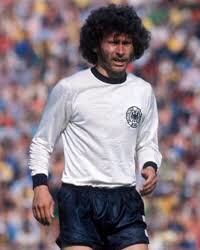
The Red Army Faction and the Baader Meinhof gang terrorised the nation as they hosted and won that year’s World Cup. The hosts won, following a close final against the Netherlands. Their astonishing right back, Paul Breitner espoused Maoist politics and a support for the anti-capitalist leanings of the terror organisations.
In music, expansion was everywhere. On the one hand the experimental and expansive noodling of Prog Rock began to touch the outreaches of mainstream pop. Ideas that only a couple of years previous were to be found on side six of of a modern reinterpretation of a classical standard were now being used to propel hit records up the higher end of the charts. Soul too had expanded. A new variation, with bigger production that utilised the equally new advances in studio technology emerged. Disco, as it became known, planted its roots firmly in the pop charts of 1974.
Singles were selling by the truckload again and nothing could stop the inexorable rise of album sales, which in every sphere and genre were yet to reach their peak.
In Jamaica, the music of the island was about to go stratospheric with an artist who had survived the sixties and was on his umpteenth record. In another studio other pioneers of sonic terror were taking apart their indigenous pop and reassembling it in the wrong order. In the sweaty sonic workshops of Kingston alchemy was being created through the power of Dub.
I guess the music reflects the changes that were afoot socially, politically and the commercial nature that would change the industry forever. The events, politics, sport of the year are more than well documented. Let your fingers do the walking and dig a little deeper, if you’re unfamiliar you’ll find the story fascinating. If you lived through it, it’s hard to believe it was ever like that.
*I wanted to try and write this without mention Punk. But Punk’s line in the sand nihilism dictated that all that all that came before was worthless yesterday music. It had to, it wouldn’t have worked otherwise. What we actually find is a year of music awash with the glories of creativity and all the ideas to take it into its multi platinum paradise and the bruising confrontation that saw the decade out.
Enjoy.
 bernie@happening-things.com